Sauce Mexican Garden-Enhanced Mole with Pitiona

Garden-Enhanced Mole with Pitiona

A deep, glossy chile-seed mole finished with pitiona for a quiet Oaxacan garden note.

Jump to Recipe

This Is the Mole I Want from a Garden Herb

Some sauces are polite. This is not one of them.

This garden-enhanced mole is deep, glossy, toasted, chile-rich, a little sweet, a little bitter, and just herbal enough to make you wonder what happened in the pot. That is the point. The pitiona is not here to shout over the chiles like an herb garden with boundary issues. It is here to sit in the background and make the whole sauce feel more alive.

This is the kind of sauce you make when you want dinner to have weight. Not heavy in the boring way. Heavy in the “someone toasted seeds and made decisions” way.

Phase One: Toast the Chiles

The mole starts with ancho and pasilla chiles. You toast them briefly in a dry skillet, just until they wake up and smell deep and fruity. Then they soak in hot water until they soften enough to blend.

Chiles bring more than heat. Their warmth comes from capsaicin, the compound that gives hot peppers their bite, and it spreads beautifully through rich sauce when treated well. You can read more about capsaicin here, but the short version is simple: chile heat has chemistry behind it, and your tongue knows immediately.

Do not burn the chiles. There is a very thin line between “complex toasted chile” and “why does my sauce taste like regret?” Respect the line.

Phase Two: Toast the Seeds

Pepitas and sesame seeds bring body, nuttiness, and that deep rounded flavor that makes mole feel expensive even when you are standing over the stove in a normal kitchen like a person with dishes in the sink.

Toasting matters because heat changes the surface of food and creates new flavor. That browning process is part of the Maillard reaction, which is just a fancy name for “heat makes food taste more interesting.”

Sesame especially has a big transformation when toasted. It goes from mild and pale to nutty, warm, and aromatic. Scientists have studied the aroma compounds in toasted sesame, but your nose will get the memo first.

Phase Three: Fry the Aromatics

Onion and garlic get cooked until deeply golden. Raisins go in briefly. The tortilla gets fried until golden too.

This is where the sauce starts building structure. The onion gives sweetness. The garlic gives depth. The raisins give a quiet fruit note. The tortilla gives body so the finished mole has that slow, spoon-coating texture instead of acting like chile broth in a hurry.

This is not dump-and-blend cooking. This is layer-and-build cooking. Slightly more effort, dramatically less boring.

Phase Four: Blend It Smooth

The softened chiles, toasted seeds, fried aromatics, raisins, tortilla, cinnamon, cloves, and stock all go into the blender.

Blend longer than you think. Mole should feel unified. You are not making salsa with visible personality chunks. You are building a sauce that should taste like every ingredient signed the same contract.

Straining is optional, but I like it when I want a more polished sauce. If you want rustic, skip it. If you want smooth and restaurant-style, strain it. Both paths are honorable. One just dirties another tool, because apparently sauce demands tribute.

Phase Five: Fry the Puree

This is the part people skip, and they should not.

You fry the puree in lard or oil until it darkens. That step concentrates the flavor and takes the sauce from blended ingredients to actual mole. The fat helps carry chile flavor through the sauce because capsaicin is fat-soluble. Plain English: chile flavor spreads better when fat is involved. This is why lard works so beautifully here.

Use oil if you need to. Lard if you want the sauce to feel rounder and more traditional-leaning.

Phase Six: Simmer with Chocolate

Now the sauce gets stock and Mexican chocolate and simmers until glossy, thick, and spoon-coating.

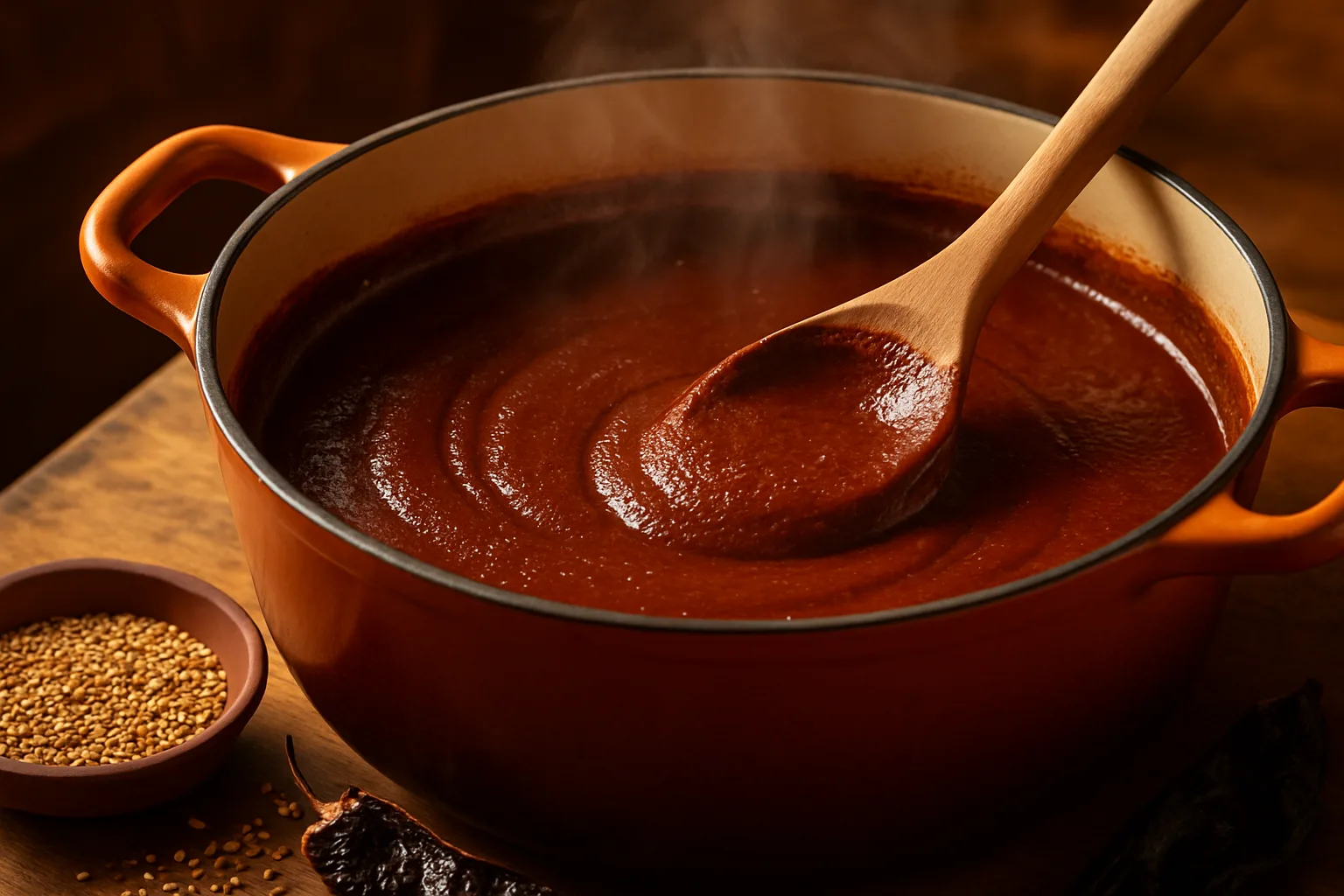
This is where mole turns into itself. The chiles settle down. The seeds thicken. The chocolate adds bitterness, sweetness, and depth. The sauce should look brick-red-brown, shiny, and serious.

If it is too thick, add stock. If it is too thin, simmer longer. Mole is not fragile. It can take a little adjustment. It has been through worse.

Phase Seven: Finish with Pitiona

The pitiona goes in near the end.

That timing matters. Add it too early and the aroma gets tired. Add too much and suddenly your mole tastes like it got lost in the herb bed. The goal is a quiet citrusy-herbal lift behind the chiles, seeds, spice, and chocolate.

You want someone to taste it and say, “What is that?”

You do not want them to say, “Why is my mole green in spirit?”

Let pitiona be the supporting voice. Mole is still the lead singer.

How I Want to Serve This

This mole belongs with chicken, pork, or turkey. It also makes deep sense with sous-vide pork because tender meat plus glossy chile sauce is one of those combinations that does not need a PowerPoint presentation.

Spoon the mole under the meat, over the meat, or beside warm corn tortillas. Finish with toasted sesame seeds, extra pepitas, thin-sliced radish, and cilantro if you want the plate to look like you planned ahead.

The sauce should move slowly from a spoon, cling to the meat, and leave a little streak on the plate. That is the texture. That is the mood.

Happy cooking, my adventurous eaters.

Recipe

Prep: 25 min Cook: 1 hr 20 min Total: 1 hr 45 min Yield: About 1 quart (enough for 4–6 lb chicken, pork, or turkey)

Ingredients

Instructions

  1. Toast and soak the chiles: Stem and seed the ancho and pasilla chiles. Toast in a dry ~350°F skillet about 10–15 seconds per side, just until fragrant — do not burn them. Cover with hot water and soak 20 minutes; reserve the soaking liquid.
  2. Toast the seeds: In the same skillet, toast the pepitas until puffed, lightly golden, and nutty; remove. Toast the sesame seeds until golden; remove.
  3. Fry the aromatics: Add lard to the pan and cook the onion and garlic until deeply golden. Add the raisins and cook 1 minute.
  4. Fry the tortilla: Cook the torn tortilla pieces in the remaining fat until golden — this gives the mole body.
  5. Blend the base: Blend the soaked chiles, pepitas, sesame, onion, garlic, raisins, tortilla, cinnamon, cloves, and 2 cups stock until completely smooth, adding stock as needed to keep it moving.
  6. Strain (optional but recommended): Push the puree through a fine mesh strainer for a smoother, restaurant-style sauce.
  7. Fry the puree: Heat lard in a Dutch oven and carefully add the puree (it may sputter). Cook, stirring frequently, 10–15 minutes until the color darkens noticeably.
  8. Simmer with chocolate: Add the remaining stock and the Mexican chocolate. Simmer gently 30–45 minutes until glossy, thick, and spoon-coating.
  9. Add the pitiona: In the last 10 minutes, stir in the pitiona. Taste after 5 minutes; add another teaspoon fresh if it's too subtle. It should be detectable but not dominant.
  10. Adjust the texture: The mole should flow slowly from a spoon. Too thick — add stock; too thin — simmer longer. Season with salt to taste.
TC
From the kitchen of Timothy Cunningham's Kitchen
Sauce

Garden-Enhanced Mole with Pitiona

A deep, glossy chile-seed mole finished with pitiona for a quiet Oaxacan garden note.

Published
June 14, 2026
Yield
About 1 quart (enough for 4–6 lb chicken, pork, or turkey)
Course
Sauce
Cuisine
Mexican

At a glance

Prep time25 min
Cook time1 hr 20 min
Total time1 hr 45 min

Ingredients

What you need

  • 4 dried ancho chiles, stemmed and seeded
  • 3 dried pasilla chiles, stemmed and seeded
  • 1/2 cup pepitas (pumpkin seeds)
  • 1/4 cup sesame seeds
  • 1/3 cup raisins
  • 1 medium white onion, sliced
  • 4 garlic cloves
  • 1 cinnamon stick (or 1 tsp Mexican cinnamon)
  • 2 whole cloves
  • 1 corn tortilla, torn into pieces
  • 2 oz Mexican chocolate
  • 1 tbsp fresh pitiona leaves, chopped (or 1 tsp dried pitiona)
  • 3 cups chicken stock
  • 3 tbsp lard (preferred; or neutral oil)
  • 1–2 tsp salt, to taste

Method

How to make it

  1. Toast and soak the chiles: Stem and seed the ancho and pasilla chiles. Toast in a dry ~350°F skillet about 10–15 seconds per side, just until fragrant — do not burn them. Cover with hot water and soak 20 minutes; reserve the soaking liquid.
  2. Toast the seeds: In the same skillet, toast the pepitas until puffed, lightly golden, and nutty; remove. Toast the sesame seeds until golden; remove.
  3. Fry the aromatics: Add lard to the pan and cook the onion and garlic until deeply golden. Add the raisins and cook 1 minute.
  4. Fry the tortilla: Cook the torn tortilla pieces in the remaining fat until golden — this gives the mole body.
  5. Blend the base: Blend the soaked chiles, pepitas, sesame, onion, garlic, raisins, tortilla, cinnamon, cloves, and 2 cups stock until completely smooth, adding stock as needed to keep it moving.
  6. Strain (optional but recommended): Push the puree through a fine mesh strainer for a smoother, restaurant-style sauce.
  7. Fry the puree: Heat lard in a Dutch oven and carefully add the puree (it may sputter). Cook, stirring frequently, 10–15 minutes until the color darkens noticeably.
  8. Simmer with chocolate: Add the remaining stock and the Mexican chocolate. Simmer gently 30–45 minutes until glossy, thick, and spoon-coating.
  9. Add the pitiona: In the last 10 minutes, stir in the pitiona. Taste after 5 minutes; add another teaspoon fresh if it's too subtle. It should be detectable but not dominant.
  10. Adjust the texture: The mole should flow slowly from a spoon. Too thick — add stock; too thin — simmer longer. Season with salt to taste.

Frequently Asked Questions

Is mole just chocolate sauce?

No. Chocolate is only one voice in the choir. This mole is built from toasted chiles, seeds, aromatics, raisins, tortilla, spice, stock, and Mexican chocolate, so the flavor is savory, earthy, nutty, fruity, and deep—not dessert sauce on meat, which would be a crime against dinner.

How spicy is this mole?

This mole should be warm and chile-forward, not painfully hot. Ancho and pasilla chiles bring depth, fruit, and earth more than raw fire. The heat should sit in the background with the pitiona, behaving itself like an adult.

Can I make it ahead, and how do I store it?

Yes, mole is a strong make-ahead sauce because the flavors settle and deepen. Store it chilled if making ahead, and loosen it with stock when reheating if it thickens up too much.

What can I serve it with?

Serve it with chicken, pork, or turkey. I especially like it with sous-vide pork or any meat that can handle a deep chile sauce. Warm corn tortillas are not optional in spirit, even if technically no one can arrest you.

Can I use oil instead of lard?

Yes. Lard is preferred because it gives the sauce a rounder, richer flavor, but neutral oil works. The important thing is frying the puree in fat so the chile flavor blooms and spreads through the mole.